
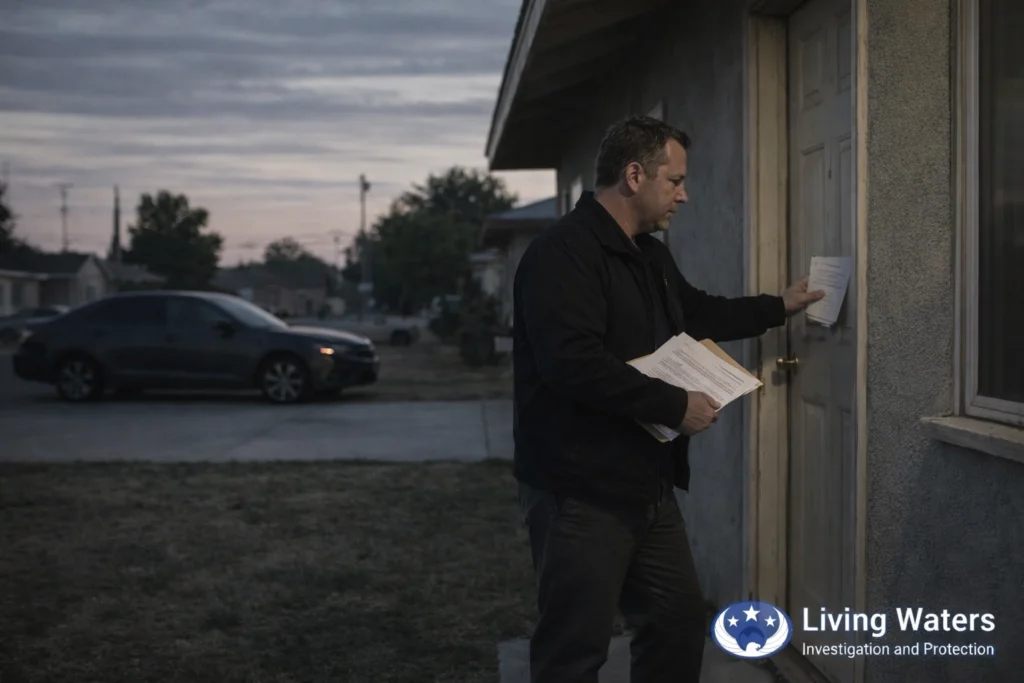
Some individuals don't just avoid service: they actively evade it. They recognize process servers at a distance, refuse to answer doors, send family members to intercept, or disappear entirely when litigation looms. In California's diverse communities across San Bernardino County, Riverside County, Los Angeles County, and Orange County, this challenge intensifies when language barriers complicate already high-risk situations.
High-risk process service demands more than persistence. It requires tactical awareness, cultural sensitivity, federal-level training, and bilingual capability. At Living Waters Investigation and Protection, we bring all four to every assignment.

What Defines High-Risk Process Service / Qué Define el Servicio de Procesos de Alto Riesgo
English: High-risk process service typically involves evasive subjects who have demonstrated patterns of avoidance, aggressive behavior, or deliberate obstruction. These cases extend beyond the standard knock-and-serve protocol.
Español: El servicio de procesos de alto riesgo generalmente involucra sujetos evasivos que han demostrado patrones de evasión, comportamiento agresivo u obstrucción deliberada. Estos casos van más allá del protocolo estándar de tocar y servir.
High-risk indicators include:
- Subjects with documented history of service evasion
- Individuals who have threatened or intimidated previous process servers
- Locations known for restricted access or security challenges
- Cases involving domestic violence restraining orders
- Subjects who actively monitor for process servers and deploy countermeasures
- Multi-family residences where gatekeepers intercept service attempts

In communities throughout Rancho Cucamonga, Ontario, Irvine, and Los Angeles, we encounter another layer: language barriers that prevent effective communication during service attempts. When a process server cannot communicate clearly with household members, verify identity, or explain the nature of service, completion rates drop and legal compliance becomes uncertain.
The Bilingual Advantage in Evasive Subject Process Service / La Ventaja Bilingüe en el Servicio de Sujetos Evasivos
Language creates leverage in high-risk situations. An evasive subject process server who speaks only English faces significant disadvantages when approaching Spanish-speaking households:
Household members may:
- Refuse to answer questions due to misunderstanding
- Provide inaccurate information about the subject's whereabouts
- Become defensive or uncooperative when they don't understand the legal nature of service
- Inadvertently obstruct service through miscommunication
Bilingual process servers eliminate these barriers. When we approach a residence and communicate in the household's primary language, we:
- Build immediate rapport and reduce defensiveness
- Obtain accurate information about the subject's schedule and habits
- Explain legal obligations clearly, reducing confrontation
- Verify identity with precision
- Complete service in compliance with California Code of Civil Procedure requirements
This capability proves particularly valuable in the heavily bilingual communities across Southern California's Inland Empire and surrounding counties.

Tactical Approaches for High-Risk Service / Enfoques Tácticos para Servicio de Alto Riesgo
Serving evasive subjects requires strategy beyond simply appearing at a known address. Our federal law enforcement and military JAG background informs every high-risk assignment:
Pre-Service Intelligence Gathering
Before any service attempt, we conduct comprehensive subject research:
- Employment verification and work schedule analysis
- Vehicle identification and registration checks
- Social media monitoring for location patterns
- Interview of neighbors and associates (when legally permissible)
- Identification of secondary addresses and frequent locations
This intelligence-driven approach increases first-attempt success rates significantly.
Timing and Surveillance Integration
Standard process service occurs during predictable hours. High-risk process service demands flexibility:
- Early morning service before subjects leave for work
- Late evening service when evasive individuals assume servers have ceased attempts
- Weekend and holiday service when subjects lower their guard
- Surveillance to establish patterns before service attempts
For cases requiring extended observation, we integrate our corporate surveillance capabilities to track subject movements and identify optimal service windows.
Multiple Approach Strategies
Evasive subjects recognize process servers. They watch for unfamiliar vehicles, strangers approaching their door, and individuals carrying clipboards or legal documents. We counter these awareness tactics through:
- Varied approach times and methods
- Use of unmarked vehicles appropriate to the neighborhood
- Professional attire that blends with the environment
- Secondary contact strategies when primary residence proves unsuccessful
- Coordination with local law enforcement when safety concerns arise
Legal Compliance in Bilingual Service / Cumplimiento Legal en Servicio Bilingüe
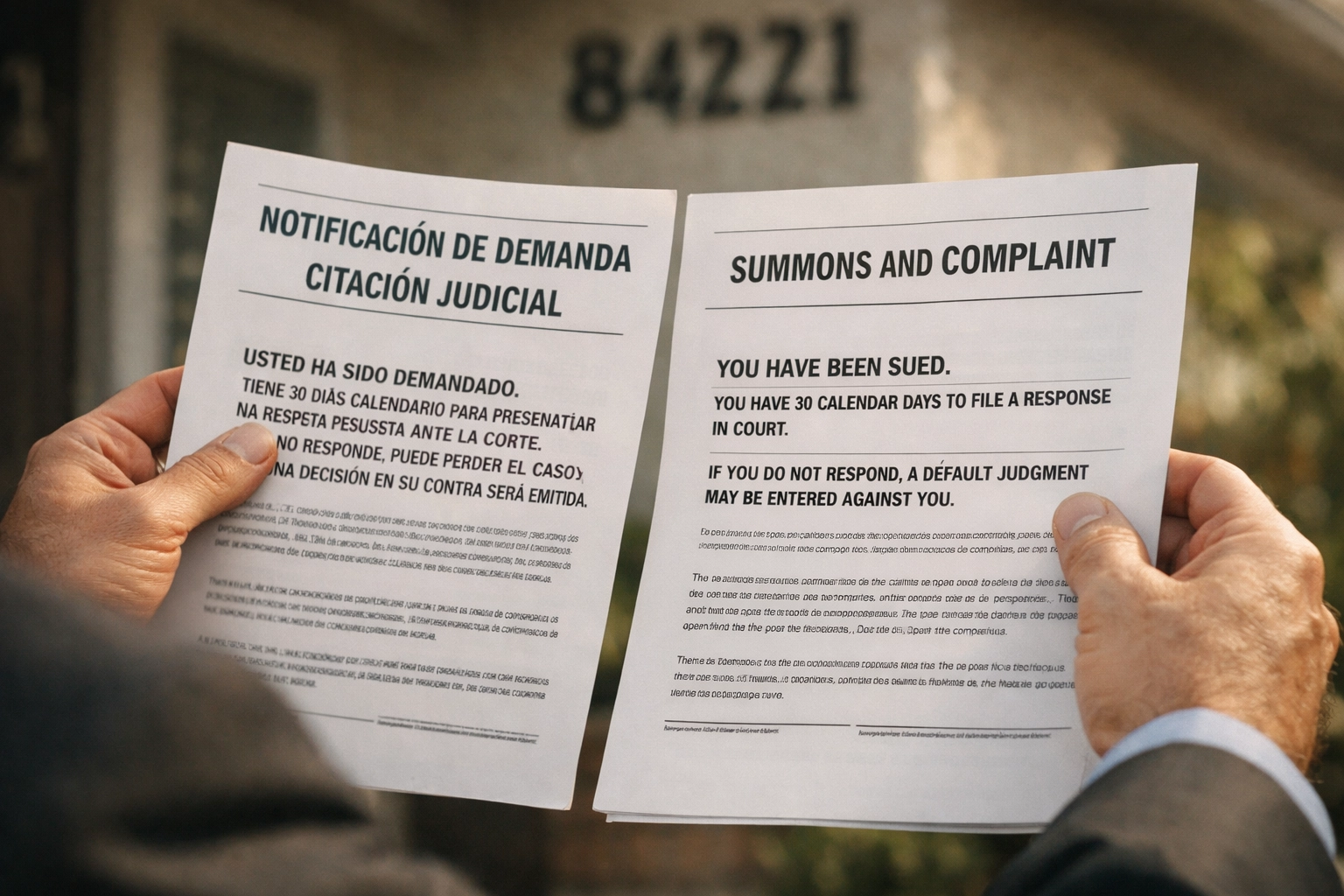
California law requires that service of process meet strict procedural standards. When language barriers exist, additional care ensures compliance:
Proper identification verification: We confirm subject identity through bilingual dialogue, visual confirmation, and supporting documentation before service completion.
Clear communication of document nature: California Code of Civil Procedure does not require process servers to explain document contents, but clear communication in the subject's language reduces later claims of improper service.
Accurate proof of service documentation: Our declarations of service precisely document the service encounter, including language used, identification methods, and any statements made by the subject.
Cultural competency: Understanding cultural norms within California's diverse communities prevents misunderstandings that could invalidate service or create safety issues.
Every member of our team receives ongoing training in California process service law, including recent updates to substituted service requirements and electronic service provisions.
When Standard Service Fails: Alternative Service Methods / Cuando el Servicio Estándar Falla
When evasive subjects successfully avoid personal service, California law provides alternative methods:
Substituted Service: Delivery to another person at the subject's residence or workplace, followed by mailed notice. Bilingual capability ensures proper explanation to the substitute recipient.
Service by Posting: When other methods fail, service by posting and mailing. We document extensive due diligence attempts before pursuing this method.
Service by Publication: Reserved for situations where the subject's whereabouts remain unknown despite diligent search efforts.
Our team at Living Waters Investigation and Protection guides attorneys through these alternative methods, ensuring proper documentation and compliance at every stage.
Safety Protocols in High-Risk Situations / Protocolos de Seguridad en Situaciones de Alto Riesgo
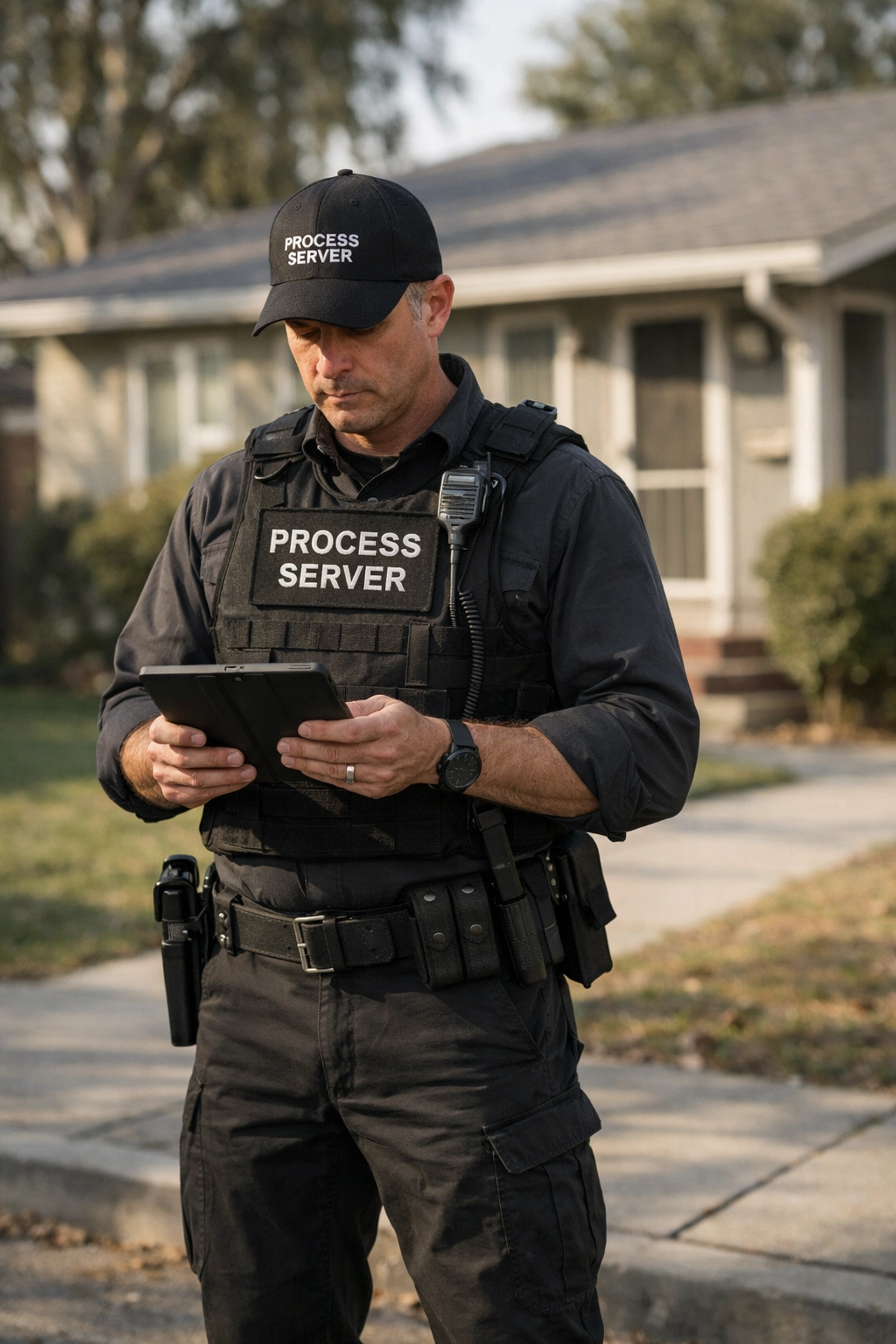
High-risk process service occasionally involves subjects with histories of violence, substance abuse issues, or severe mental health crises. Our safety protocols include:
- Comprehensive threat assessment before every service attempt
- Two-person teams for high-risk assignments
- Immediate de-escalation techniques grounded in federal law enforcement training
- Coordination with local law enforcement when credible threats exist
- Body camera documentation for subject interactions (where legally permitted)
- Clear exit strategies and situational awareness at all times
We refuse service attempts that place our team or community members at unreasonable risk. Professional process service never justifies compromising safety.
The Living Waters Difference: Federal Training Meets Local Expertise
Living Waters Investigation and Protection brings veteran-level expertise to California process service:
- Federal law enforcement experience informing tactical approaches
- Military JAG background ensuring strict legal compliance
- Native bilingual capability (English/Spanish) throughout our team
- Licensed and insured in accordance with California state requirements
- Transparent, straightforward pricing for high-risk service assignments
- Absolute discretion and professionalism in every client interaction
Our service areas span San Bernardino County, Riverside County, Los Angeles County, and Orange County, with particular expertise serving the bilingual communities throughout these regions.
Moving Forward: Completing Service When Others Cannot
High-risk process service exists at the intersection of legal expertise, tactical skill, cultural competency, and persistence. When evasive subjects believe they've successfully avoided service, our bilingual team finds the pathway to completion.
Whether your case involves a subject with a history of evasion, language barriers that have frustrated previous attempts, or simply the need for professional service with absolute discretion, we deliver results.
English: Contact Living Waters Investigation and Protection for high-risk process service throughout Southern California.
Español: Contacte a Living Waters Investigation and Protection para servicio de procesos de alto riesgo en todo el sur de California.
Contact us to discuss your specific case requirements. We provide straightforward consultations, transparent pricing, and professional service at every step.