The path to becoming a licensed private investigator California requires more than determination: it demands strategic navigation of state requirements, hands-on experience, and professional guidance. For those considering a career in legal investigations CA or process serving within the Inland Empire and throughout California, understanding the Bureau of Security and Investigative Services (BSIS) framework is essential.
With over three decades of federal investigative experience and field operations, we have guided numerous individuals through this licensing process. This roadmap outlines the precise requirements, timelines, and strategic advantages of working with an experienced mentor to launch your investigative career.
Understanding BSIS Requirements: The Foundation
The California Bureau of Security and Investigative Services establishes strict standards for private investigator licensing. These requirements exist to maintain professional integrity and protect public interests.
Core Eligibility Criteria:
- Minimum age of 18 years
- U.S. citizenship or permanent legal immigration status
- High school diploma or equivalent
- Clean criminal record with no disqualifying convictions
- Successful completion of DOJ and FBI background checks
These baseline requirements represent the starting point. The substantial challenge lies in accumulating the necessary investigative experience and passing the state examination.
The Experience Requirement: 6,000 Hours Explained
California mandates 6,000 hours of compensated investigative experience before qualifying for the PI examination. This translates to approximately three years of full-time investigative work. The experience must be documented, verifiable, and directly related to investigative functions.
Qualifying Experience Includes:
- Surveillance operations and counter-surveillance activities
- Background investigations and due diligence research
- Witness interviews and statement documentation
- Evidence collection and preservation procedures
- Case file preparation and report writing
- Legal research and court document preparation
Experience gained through employment with licensed private investigators, law enforcement agencies, federal investigative bodies, or military investigative units counts toward this requirement. Each hour must be compensated and properly documented with employer verification.
Education Substitution Pathways
California recognizes that formal education in investigative fields can partially substitute for work experience. These pathways accelerate the timeline to licensure:
Law Degree:
- Reduces requirement to 4,000 hours (two years)
- Demonstrates understanding of legal frameworks and evidentiary standards
Four-Year Degree in Police Science:
- Reduces requirement to 4,000 hours (two years)
- Provides foundational knowledge in investigative methodology
Associate Degree in Police Science, Criminal Law, or Justice:
- Reduces requirement to 5,000 hours (2.5 years)
- Combines theoretical knowledge with practical experience
These substitutions represent significant time savings but still require substantial field experience. The combination of academic credentials and hands-on training produces well-rounded investigators prepared for diverse case assignments.

The State Examination: What to Expect
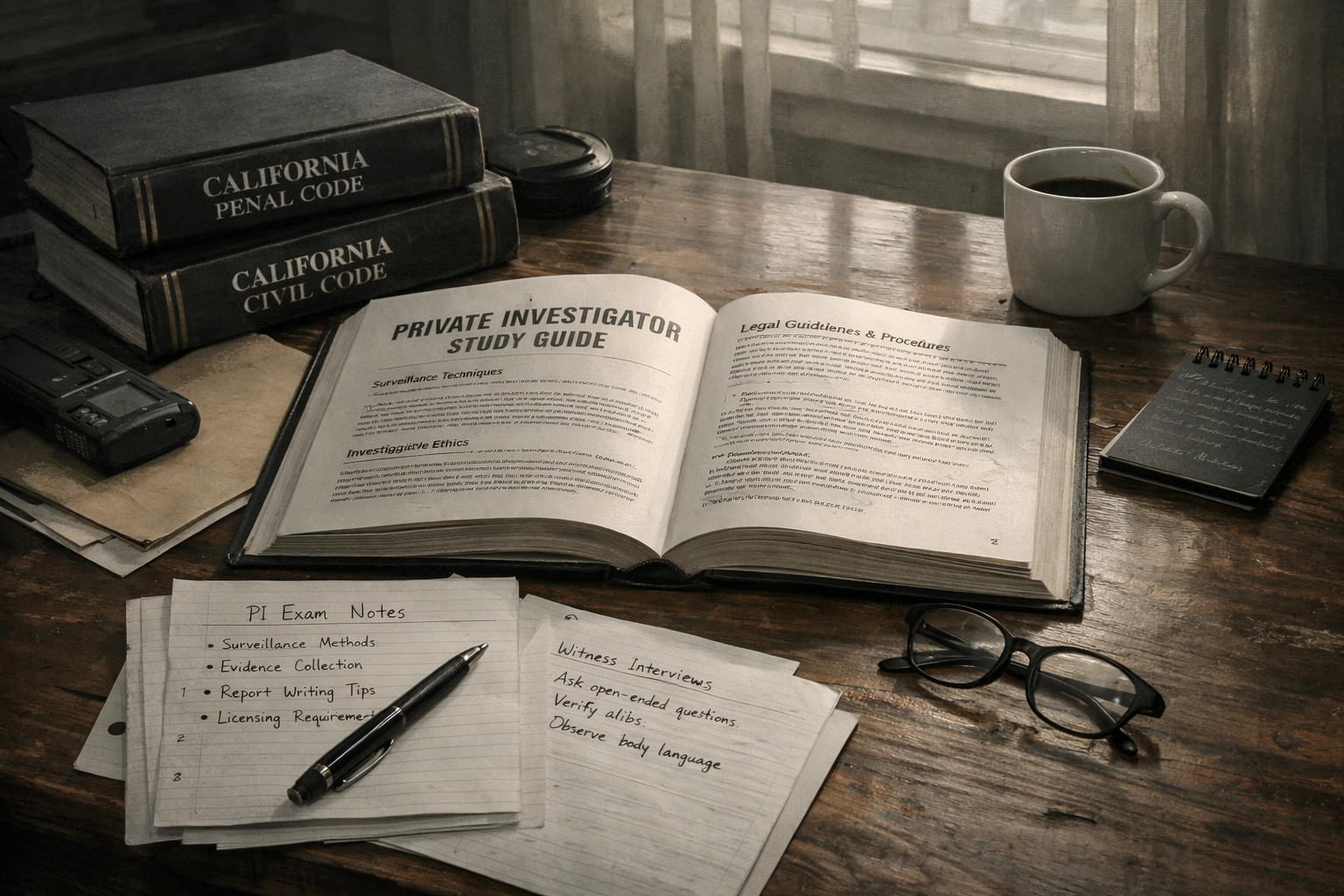
The California Private Investigator Examination consists of a two-hour, multiple-choice format covering comprehensive investigative knowledge. The examination assesses understanding across multiple domains:
Core Subject Areas:
- California laws and regulations governing private investigation
- Civil and criminal liability in investigative operations
- Evidence handling, chain of custody, and preservation protocols
- Surveillance techniques and counter-surveillance awareness
- Undercover investigation methodology and ethics
- Report writing standards and documentation requirements
- Professional conduct and client confidentiality obligations
Preparation for this examination requires more than textbook study. Practical experience informs the application of legal principles to real-world scenarios. Those who have worked under experienced mentors consistently demonstrate stronger examination performance because they understand how regulations translate to daily operations.
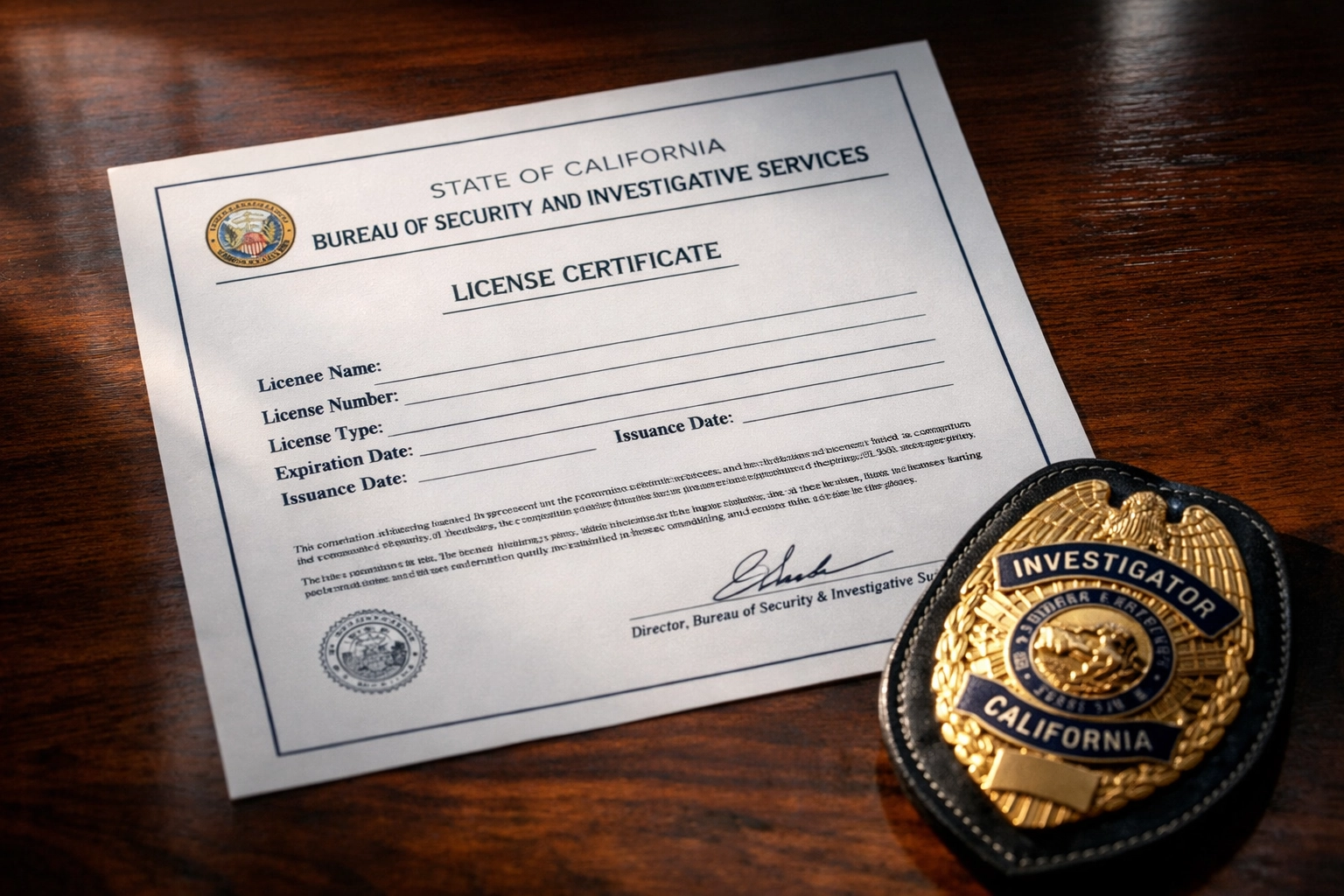
The Application and Licensing Process
Once you have accumulated the required experience and passed the state examination, the formal application process begins:
- Complete Form 31B-4 (Private Investigator License Application)
- Submit fingerprints for DOJ and FBI background checks
- Pay applicable fees: $50 application fee plus $175 license fee
- Provide verification of experience from employers or supervising investigators
- Await BSIS review and approval (processing times vary)
The license remains valid for two years and requires renewal with documented continuing education. BSIS mandates 14 hours of continuing education per renewal cycle, including a minimum of two hours in ethics and professional responsibility.
Firearms Authorization: Additional Requirements
Private investigators who intend to carry firearms during investigative operations must meet supplementary requirements:
- Minimum age of 21 years
- Completion of eight-hour "Power to Arrest" training course
- Firearms qualification through approved training provider
- Separate firearms permit application and fee
These requirements exist to ensure that investigators carrying weapons understand the legal limitations and responsibilities associated with armed operations. Many successful private investigators operate without firearms authorization, depending on their case specialization and client needs.
The Registered Process Server Alternative
For those exploring the investigative field, becoming a Registered Process Server (RPS) offers an accessible entry point. California requires less experience for RPS licensing while providing exposure to legal procedures and court systems.
RPS Requirements:
- Registration with the county clerk in the county of business operation
- Completion of required training courses
- Understanding of service of process regulations and prohibited practices
- Professional liability considerations
Many successful private investigators began their careers as process servers, developing knowledge of legal documentation, court procedures, and client communication before transitioning to full investigative licensing.
The Strategic Value of Veteran Mentorship
The technical requirements for licensure tell only part of the story. The practical reality of building a successful investigative career requires guidance that only comes from decades of field experience.
What Mentorship Provides:
- Navigation of BSIS bureaucracy: Understanding documentation requirements, avoiding application delays, and responding to examiner requests
- Practical skill development: Surveillance techniques, interview strategies, and evidence handling that exceed textbook knowledge
- Client acquisition strategies: Building a reputation, establishing referral networks, and marketing investigative services
- Specialization guidance: Identifying profitable niches such as legal investigations CA, insurance claims, or corporate due diligence
- Bilingual service opportunities: Leveraging language skills in the diverse California market, particularly as a bilingual private investigator serving Spanish-speaking communities
Veterans transitioning from federal law enforcement or military investigative roles bring unique advantages. Military discipline, security clearance experience, and federal investigative training translate directly to private sector success. However, the transition from government service to private practice requires understanding business operations, client relations, and regulatory compliance in ways that federal employment never demanded.
Building Your Investigative Business in the Inland Empire
Geographic considerations matter when establishing an investigative practice. The private investigation Inland Empire market presents specific opportunities and challenges. Understanding local court systems, law enforcement relationships, and client industries shapes business strategy.
Regional Advantages:
- Proximity to multiple county court systems
- Diverse industrial and commercial client base
- Growing legal community requiring investigative support
- Bilingual service demand in multicultural communities
- Lower operational costs compared to coastal metropolitan areas
Successful investigators in the region develop relationships with law firms, insurance adjusters, corporate risk managers, and government agencies. These relationships take years to cultivate and depend on consistent professionalism, thorough documentation, and ethical conduct.
The Investment in Professional Consultation
Aspiring investigators face a decision: navigate the licensing process independently or work with experienced guidance. The independent path involves trial and error, potential application delays, and missed opportunities for skill development.
Professional consultation accelerates the timeline to licensure and increases the likelihood of long-term career success. A structured mentorship relationship provides:
- Detailed review of your current qualifications and experience
- Customized roadmap for accumulating required hours efficiently
- Examination preparation strategies based on common challenge areas
- Networking introductions to potential employers or collaborators
- Business planning guidance for those intending to open their own agencies
- Ongoing support during the application and review process
The financial investment in consultation yields returns through faster licensure, reduced application errors, and strategic positioning for career success. Those who attempt the process without guidance frequently encounter delays, rejected applications, or inadequate preparation for the practical demands of investigative work.

Your Next Step: Schedule a Consultation
The decision to pursue private investigator licensure in California represents a significant career commitment. Whether you are a veteran seeking to transition your federal experience to the private sector, a professional considering a career change, or someone with investigative aspirations, the path to success begins with informed planning.
Living Waters Investigation and Protection offers one-on-one consultation services for aspiring private investigators and process servers. These sessions provide personalized assessment of your qualifications, detailed guidance on BSIS requirements, and strategic planning for your investigative career.
With 30+ years of federal and field investigative experience, we understand both the regulatory requirements and the practical realities of building a successful practice. Our bilingual capabilities and comprehensive knowledge of legal investigations throughout California position us to provide guidance that extends beyond basic licensing requirements.
Consultation sessions address:
- Current qualification assessment and gap analysis
- Experience accumulation strategies and documentation requirements
- Examination preparation and study resources
- Business planning for independent practice or agency employment
- Specialization opportunities based on your background and interests
- Ongoing mentorship and professional development
The investigative field rewards those who approach it with professionalism, integrity, and strategic preparation. The licensing process represents the beginning of a career that demands continuous learning, ethical conduct, and commitment to client service.
To schedule your consultation and begin your roadmap to becoming a licensed private investigator in California, visit our Careers page or contact us directly. We provide straightforward guidance, transparent fee structures, and practical support throughout your licensing journey.
Your investigative career begins with the right foundation. Professional mentorship ensures that foundation is built on experience, knowledge, and strategic planning that positions you for long-term success in this demanding and rewarding field.