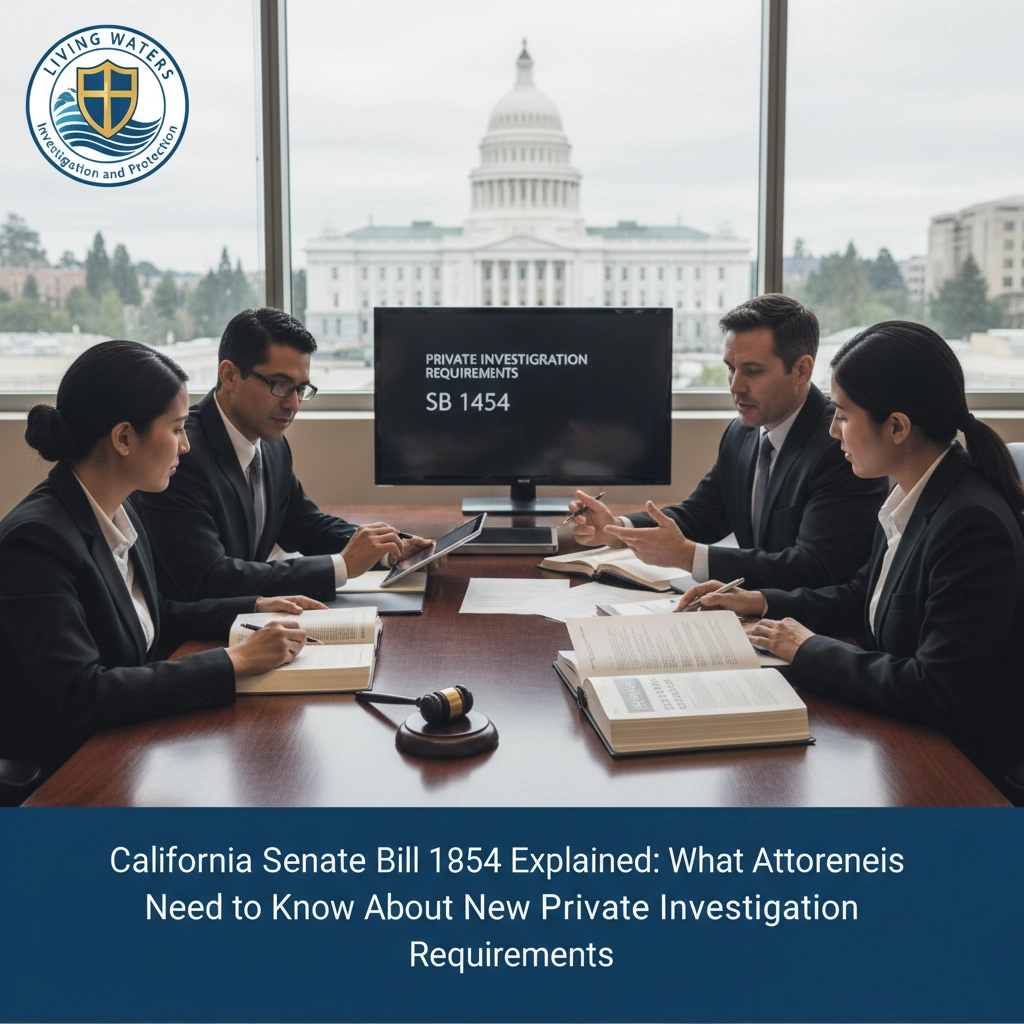
California Senate Bill 1454 fundamentally changed the landscape for private investigators and the attorneys who retain their services. Taking effect July 1, 2025, this legislation introduced stringent documentation requirements and eliminated traditional confidentiality protections that have long protected attorney work product and investigative strategies. For legal professionals throughout California, particularly those handling insurance defense, personal injury, and workers' compensation cases, understanding these changes is essential for maintaining effective case preparation while mitigating new discovery risks.
Overview of SB 1454's Core Requirements
SB 1454 amended the California Business and Professions Code by adding Section 7524, establishing comprehensive regulations for licensed private investigator services. The law's primary objective centers on transparency and accountability, achieved through mandatory documentation that creates discoverable paper trails where confidentiality previously existed.
Mandatory Written Contracts
All private investigator services must now operate under written contracts executed before any investigative work begins. These agreements must specify the complete scope of work, including precise beginning and ending dates for the investigation. Any modifications to the original scope require written amendments, creating detailed documentary records subject to discovery proceedings.
Contract requirements extend beyond basic scope definitions to include investigator information, detailed fee structures, labor costs, service descriptions, materials utilized, and employee information involved in the investigation. All contracts require written client approval before work commences or continues.
Thirty-Day Reporting Requirements
Private investigators must submit comprehensive written reports to clients within 30 days of investigation completion. This deadline applies regardless of whether investigations remain ongoing or reach discrete conclusions, ensuring consistent documentation of investigative activities and findings.
Two-Year Document Retention
Licensed investigators must maintain legible copies of signed agreements and investigative findings, including all written reports, for a minimum two-year period. These documents must remain available for Bureau of Security and Investigative Services (BSIS) inspection upon request. The retention requirement applies specifically to records maintained for governmental entities, law firms, and insurance companies.

Critical Implications for Attorney Practice
Loss of Confidentiality Protections
The most significant concern for defense counsel involves Section 7524's failure to incorporate exceptions for attorney-client privilege, work product doctrine, or traditional confidentiality protections. This represents a dramatic departure from established practice, where investigative materials frequently remained protected from discovery. The statute creates discoverable paper trails that opposing counsel can exploit during litigation.
Discovery Vulnerabilities in Surveillance Cases
Mandatory documentation requirements expose defense strategies to extensive plaintiff discovery. When plaintiff attorneys obtain initial investigative contracts specifying surveillance activity timelines, they gain strategic advantages. In sub rosa surveillance cases designed to gather impeachment evidence, contract timelines reveal when and where surveillance occurred, potentially allowing opposing counsel to prepare their clients or challenge investigator credibility by suggesting selective timing.
Pattern Evidence and Bias Claims
The two-year retention requirement enables plaintiff counsel to seek discovery of an investigator's previous work for defense firms or insurance carriers. This capability allows opposing attorneys to establish patterns suggesting investigator bias toward defense interests, transforming investigative files into credibility challenges against defense experts during testimony.
Strategic Compliance Recommendations
Develop Comprehensive Protocols
Legal professionals and insurance carriers must immediately implement written protocols governing private investigator communications and investigation direction. These protocols should acknowledge that all materials will be discoverable by opposing counsel, requiring careful consideration of what information appears in written documentation versus protected attorney work product.
Diversify Investigative Services
Insurance carriers should consider utilizing multiple investigative firms rather than concentrating work with single providers. This approach reduces discoverable referral volumes to any individual service and mitigates bias claims that plaintiff counsel might raise based on historical engagement patterns.
Careful Scope Definition Balance
Given that contract scope documents face discovery, counsel must thoughtfully balance clear investigative direction against strategic exposure risks. Contracts must remain sufficiently specific for SB 1454 compliance while minimizing revelation of litigation strategy to opposing parties.

Living Waters Investigation and Protection: Your Trusted Legal Partner
At Living Waters Investigation and Protection, we understand the complex challenges SB 1454 presents for California attorneys. Our veteran-owned firm, based in the Inland Empire, has adapted our practices to ensure full compliance while maintaining the highest standards of investigative excellence that legal professionals demand.
Federal Background and Legal Expertise
Our team's extensive federal law enforcement background provides unique insight into regulatory compliance and legal documentation requirements. We work closely with attorneys to structure investigative agreements that satisfy SB 1454 mandates while protecting attorney interests to the maximum extent possible under the new framework.
Bilingual Services for Comprehensive Coverage
Our bilingual capabilities ensure effective communication and investigation across diverse communities throughout California. Whether conducting interviews, gathering evidence, or preparing reports, our Spanish-speaking investigators provide seamless service that strengthens your case preparation.
Strict Confidentiality and Professional Standards
Despite SB 1454's impact on traditional confidentiality protections, we maintain absolute discretion in all client communications and handle every investigation with unwavering integrity. Our protocols ensure that while we comply fully with mandatory documentation requirements, we protect sensitive information through careful communication practices and strategic case management.
Practical Implementation Strategies
Timeline Considerations
Since SB 1454 took effect July 1, 2025, all current investigative agreements must comply with Section 7524 requirements. Attorneys should verify that their standard service agreements incorporate these mandatory provisions and counsel clients about limited confidentiality now afforded to investigative work products.
Communication Best Practices
Establish clear boundaries between protected attorney-client communications and discoverable investigative documentation. Consider conducting sensitive case discussions through privileged attorney channels rather than investigative contract communications that become subject to discovery.
Documentation Strategy
Develop systematic approaches for essential investigative direction while minimizing strategic exposure through overly detailed scope statements. Focus contract language on operational requirements rather than litigation theory or case strategy discussions.

Insurance and Workers' Compensation Considerations
For insurance claim investigators and workers' compensation attorneys, SB 1454 presents particular challenges given the routine nature of investigative services in these practice areas. The law's documentation requirements create new considerations for routine surveillance, background investigations, and claim verification procedures.
Enhanced Due Diligence
Insurance carriers must now factor discovery implications into investigative decision-making processes. The previously routine practice of extensive surveillance documentation now requires careful cost-benefit analysis considering potential plaintiff access to investigative materials.
Strategic Timing Considerations
The mandatory documentation of investigation beginning and ending dates requires strategic consideration of timing relative to case developments, medical examinations, and other critical case events that opposing counsel might exploit during discovery proceedings.
Moving Forward Under SB 1454
California's legal and investigative communities continue adapting to SB 1454's requirements while maintaining effective case preparation and client service. Success under this new framework requires partnerships with experienced private investigator services that understand both regulatory compliance and legal strategy implications.
At Living Waters Investigation and Protection, we provide the expertise, professionalism, and adaptability that California attorneys need to navigate this changed landscape successfully. Our commitment to excellence, combined with our understanding of legal requirements and investigative best practices, ensures your cases receive the thorough, professional attention they deserve.
Ready to discuss your investigative needs under California's new requirements? Contact Living Waters Investigation and Protection for a confidential consultation.
English: Call (909) 318-0741 or visit livingwatersinvestigation.com to schedule your consultation.
Español: Llame al (909) 318-0741 o visite livingwatersinvestigation.com para programar su consulta.
Professional investigative services throughout the Inland Empire and California. Veteran-owned, bilingual, and committed to your success.